(Courtesy: @stlouisatrium/Instagram & Canva)
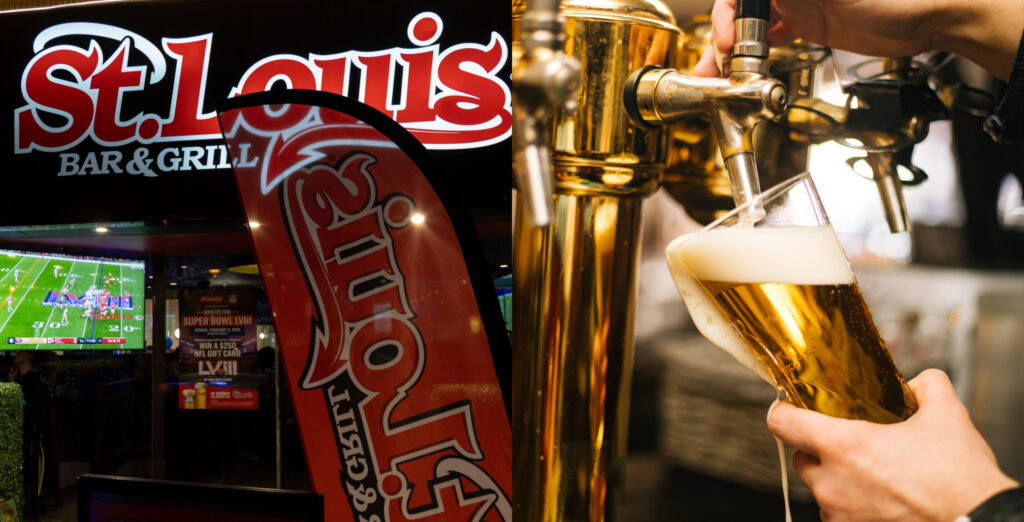
A St. Louis Bar & Grill located in Toronto is facing a 60-day liquor license suspension following the death of a customer who was over served alcohol and later fell down the stairs at the restaurant.
The AGCO confirmed that on April 11, 2026, over the span of five-and-a-half hours, the customer had been served a total of 14 beers, that were 23-ounces each. This equals over 21 standard drinks.
“The Alcohol and Gaming Commission of Ontario (AGCO) issued a Notice of Proposal for a 60-day suspension of the liquor sales licence of St. Louis Bar & Grill at 11 St. Clair Avenue West in Toronto,” reads the statement from AGCO.
According to the AGCO’s investigation, the establishment continued to serve the customer alcohol after intoxication, violating the Liquor Licence and Control Act, 2019 (LLCA).
Michael Smitiuch, founder of Smitiuch Injury Law examined the legal responsibility of this incident and weighed in on potential outcomes the establishment could face, calling this occurrence “outrageous” and “shocking”.
“The law requires the servers to stop serving someone when they’re apparently intoxicated. After this amount of alcohol, I mean, that should have been apparent long before that many drinks were served,” Smitiuch told The Brandon Gonez Show.
Smitiuch explained that bar owners and servers can face consequences on multiple legal fronts if a patron is overserved, including regulatory action, civil liability and potential criminal charges.
He says that as an establishment and servers, their job is to make sure customers are safe and that something like this could lead to criminal charges.
“I will say it’s rare to be charged with something like criminal negligence causing death. And I know in this particular case, the police said there was nothing criminal about it. But that’s a third layer where you potentially could face actual charges,” he said.
He also emphasized the importance of smart serve training, a certification all servers who are dealing with alcohol must obtain in Ontario. Proper training ensures the server can factor in when a customer is getting to the point of intoxication and should be cut off.
Although, Smitiuch says that in this situation, the responsibility would fall on the establishment.
“So they are what’s called vicariously liable for the actions of their employees. So that’s a civil law concept,” said Smitiuch. “So I would presume that this place is going to get sued, and it’s going to be, the server will be named, and so will the bar. But ultimately, in law, it’s the establishment that is responsible for their employees’ conduct,” he added.
Smitiuch says that since the establishment is at fault for this incident, he believes the outcome to the whole incident will be compensation to the family of the patron that died.
“No amount of compensation will ever make up for their loss, but the way I see this going, it’s a no-brainer civil lawsuit,” said Smitiuch.