(Courtesy: @dr.bastiany/Instagram)
Representation in any career field is important in shaping the next generation of people in our communities, and as it has gotten better in Canada there is definitely still room for a lot of improvement.
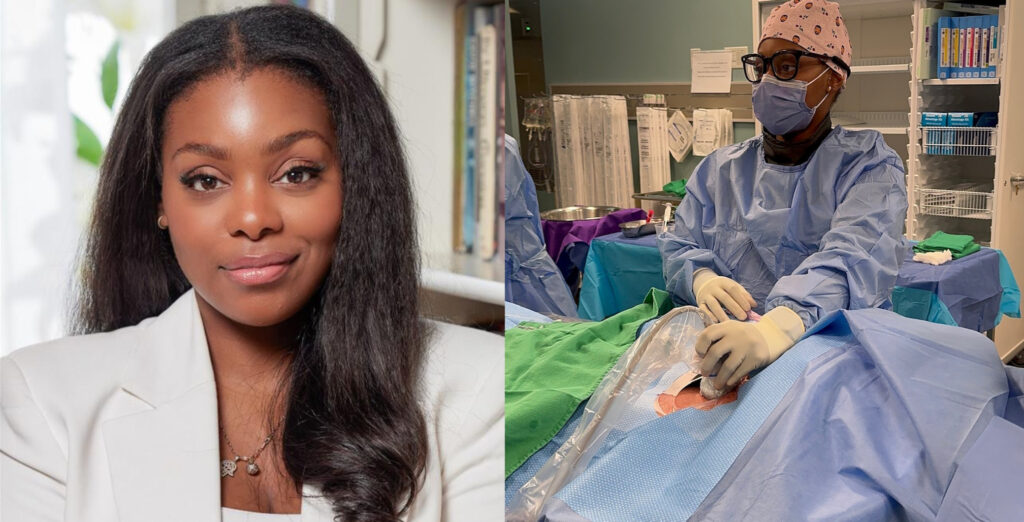
Dr. Alex Bastiany is the first Canadian Black female interventional cardiologist and her inspiring story is helping shape the future of medicine in the country.
Coming from a Haitian background with a mother who was a nurse and a father who was a scientist, she knew from a young age that she wanted to pursue a career in medicine.
“I knew that I wanted to be someone who would be close to people, helping people change their lives, and I’m a very fast-paced person so I needed a specialty that would allow me to do that,” Dr. Bastiany told The Brandon Gonez Show.
An interventional cardiologist diagnoses and treats heart and blood vessel conditions using minimally invasive catheter-based procedures.
Holding the title of the first Black female Canadian in this field is empowering, but she hopes that there are many more to join her.
Currently practicing in British Columbia, Dr. Bastiany told The Brandon Gonez Show how she has received many messages from people all around the world. From Nigeria to the Caribbean, showing her how much representation matters.
“There’s not a lot of us, and seeing someone who did it before often means that you can do it as well,” said Dr. Bastiany. “So I’m just happy for people who come after me, and I’m just really excited for other people who look like me to be doing the same thing. Like right now it’s just me, and it’s kind of boring. I want more.”
She also described the challenges she had to face since med school, being one of the only visible minorities in the room.
“Obviously we always talk about microaggressions, and things like that, and that has been my reality, and is still my reality today. But I must say that I’ve had a lot of support. I’ve got great mentors, and friends [and] allies until this day,” said Dr. Bastiany.
“Though I made some of my best friends I met in med school, and they were there to support me and made this whole experience just the most enjoyable. So yes it was difficult, but when I look back, I tend not to remember these things.”
An issue that is being brought to light within the Canadian medical system that some may not be aware of is how the lack of representation in health care centres are also affecting patients.
As multicultural as Canada is, there are some people who are not native to the country who may be dealing with language barriers when seeking medical help, which can lead to miscommunication, frustration on both ends as well as feeling isolated.
Dr. Bastiany shares a moment when an Indian patient of hers who spoke Punjabi clearly felt lost due to the language barrier, and how relieved the person felt when she brought in an interpreter for the patient.
“I will never forget, they were so excited to finally hear someone speak their language and see that the effort had been done to bring someone to their bedside and cater to their needs,” she shared.
Dr. Bastiany is in the works of creating safe spaces for Black, Indigenous and people of colour (BIPOC) who are pursuing a career in being a physician so they can practice medicine with a sense of community and belonging.
Her goal is to be known not only as the first Black Canadian woman in her field but to leave a larger impact on the lives of others pursuing the same.
“In Canada, in the US, there’s a lot of kudos, but I want to change the mindset. I want to change it so that Black physicians feel like they belong. Right now, it’s like we’re always fighting,” she explains.
“Always fighting to have a seat at the table, always fighting to have to be in places of leadership, always fighting for everything. I’m currently working to build a softer life for a bad position in medicine. So, that’s what I want people to remember, that’s what I want my legacy to be.”
She also spoke on the lack of accessibility to medical programmes in Canada like cardiac rehab or access to a psychologist, that help people who suffer from heart attacks. Many in this situation are not aware of these resources or sometimes not referred by a professional.
“I want to say 30 percent of patients do experience depression or depressive symptoms after a heart attack, and they don’t actually have access to that kind of service, which exists,” she says.
Dr. Bastiany is using her platform to encourage and educate people on heart health, and is encouraging people who are pursuing their dreams in the field. She voices the importance of seeking mentorship from others, working hard by trying new things and to put yourself out there.
“I remember going up to my mom’s work, and I didn’t want to be a nurse, but I went there and I did some nurse work because I was like, ‘you know what, I want to know what it’s like. I want to see the reality.’ So no work is below you, just try everything,” she shares.